UK: 03330 156 651 | IE: 01263 5299
-
UK: 03330 156 651
-
IE: 01263 5299


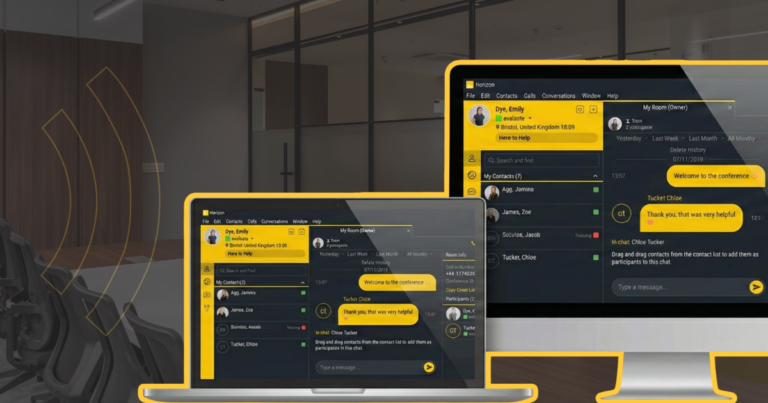
Hybrid work is no longer a temporary operating model. For many UK and Irish organisations, it is now the default and that creates a familiar set of communications problems:
- Calls to office numbers go unanswered when people are off-site
- Customer-facing teams struggle to transfer calls and share context
- Managers lack visibility into call volumes, response times, and performance
- Legacy PBX and line-based services limit flexibility and complicate moves/adds/changes
A Horizon Phone System (often referred to as Horizon Cloud Communications) is designed to solve exactly those challenges: it delivers enterprise-grade business telephony and unified communications through the cloud, so your team can operate consistently whether they are in the office, at home, or on the road.
Below is a practical guide to what Horizon is, how it supports hybrid working, and how Yellowcom typically delivers a smooth migration.
What is Horizon Cloud Communications?
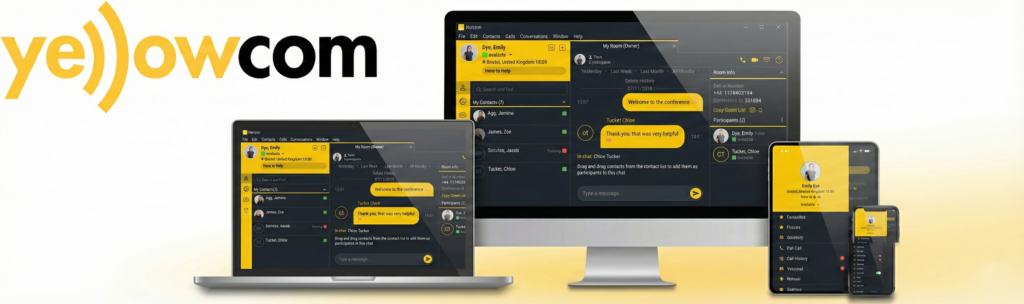
Horizon is a secure, scalable cloud phone system that replaces on-premises PBX and legacy line services with a modern platform accessible from multiple devices. For end users, that means consistent calling and collaboration from desk phones, mobile apps, and browser-based tools. For administrators, it means centralised control, user management, and reporting—without maintaining on-site PBX hardware.
Yellowcom provides Horizon as a flagship cloud communications platform, combining the technology with implementation, onboarding, and trusted local support across the UK and Ireland.
Why hybrid teams specifically benefit from a Horizon Phone System
Hybrid working isn’t just “people in different locations.” It changes how calls flow, how teams collaborate, and how customers experience your business. Horizon is well-suited to hybrid operations for five reasons.
1) Consistent inbound call handling – wherever staff are
Hybrid teams need inbound calls to land reliably, regardless of whether a user is at a desk, on a laptop, or using a mobile app. A cloud platform helps eliminate location-dependence so customers get a consistent experience, while internal teams can transfer, escalate, and collaborate without “where are you today?” friction.
2) One system across multiple sites (and home working)
If you have multiple offices, satellite sites, or a distributed workforce, Horizon centralises your numbering, call routing, hunt groups, queues, and auto-attendants into a single environment—reducing complexity and making standardisation easier.
3) Productivity via integrations
Hybrid teams rely on fewer “systems,” not more. Horizon supports unified communications and integration pathways such as Microsoft Teams enablement and contact-centre capability, helping reduce tool sprawl and improve adoption.
4) Better visibility and accountability
When teams are distributed, managers need real operational insight: call volumes, answer rates, peak times, missed calls, performance by queue/user, and historical reporting. Horizon’s analytics capability is designed to provide that visibility.
5) A clearer path away from legacy services ahead of the PSTN switch-off
The UK’s legacy PSTN network is scheduled to switch off in 2027, making it increasingly risky to defer modernisation if you still depend on traditional line-based services or ageing PBX estates. A cloud migration programme reduces the likelihood of rushed decision-making later.
What hybrid-ready looks like in Horizon (real-world features that matter)

Most businesses don’t need “every feature.” They need the right combination that supports flexible working while protecting service quality and customer experience.
Core telephony and routing
- Auto-attendant and IVR to direct calls to the right place quickly
- Call queues for sales and support teams, with consistent handling regardless of location
- Hunt groups and smart call distribution to share workload across a hybrid team
- Voicemail-to-email so messages don’t live on a single physical handset
Mobility and device flexibility
- Desktop softphone and mobile app usage so staff can call and receive calls under their business identity wherever they are
- Browser-based options for teams that are laptop-first or frequently moving locations
Gamma positions Horizon as a “connect anywhere” UC platform designed for modern work environments.
Collaboration and UC options
Depending on your environment and user preference, Horizon can be positioned alongside broader collaboration tooling—helpful for hybrid businesses that need calling, messaging, video, and conferencing in a coherent model.
Microsoft Teams voice enablement
If Teams is already where your users live, the practical goal is to add robust business calling—without forcing a second, parallel phone system. Horizon supports Teams calling integration as part of its UCaaS model.
Customer experience options (contact centre)
Hybrid service teams often need more than “answer and transfer.” Horizon can be extended with contact-centre capabilities to manage higher volumes, multiple channels, and better reporting—especially valuable if you run a small-to-mid-size support operation.
Yellowcom’s delivery approach for Horizon (built for low disruption)
Hybrid transformations fail when comms changes disrupt day-to-day operations. The delivery model matters as much as the platform.
Yellowcom’s Horizon proposition centres on pairing the cloud system with a structured rollout approach and local support.
A typical implementation programme includes:
1) Connectivity and readiness assessment
A VoIP readiness approach (network, connectivity, call-quality considerations) ensures the system performs as expected from day one—particularly important when home networks and multiple sites are involved.
2) Licence, device and integration alignment
Hybrid teams often use a mix of desk phones, headsets, softphones, and mobile apps. The objective is to match profiles to roles (front desk, sales, support, leadership, mobile workers), while aligning integrations such as Teams calling and reporting.
3) Configuration, onboarding and user adoption
Hybrid rollouts typically benefit from short, role-based training: “how to handle calls,” “how to transfer,” “how to pick up queue calls,” “how to use the app,” and “how to manage availability.”
4) Support model and continuous optimisation
Once live, the goal is proactive optimisation: adjusting call flows, refining queues, and using analytics to improve responsiveness and customer experience over time.
A simple checklist: Is your business ready for a Horizon Phone System?
📋 Horizon System Readiness Check
Check all that apply to your current business situation:
FAQs
- Is Horizon suitable for small businesses or only enterprises?
Horizon is commonly positioned as a scalable UCaaS platform that can be sized to suit different organisation types, from smaller operations to multi-site environments. - Will the PSTN switch-off affect my business? BT states the UK’s PSTN will switch off in 2027, so organisations still relying on legacy line-based services should plan an IP transition to avoid disruption.
- Can we use Horizon with Microsoft Teams? Yes – Horizon supports Teams calling enablement as part of a cloud communications model.
Hybrid work demands a hybrid-ready phone system
A Horizon Phone System gives hybrid organisations a practical way to standardise calling, improve the customer experience, and give teams consistent tools across office, home, and mobile working – while simplifying administration and gaining operational visibility.
If you want to assess fit quickly, the most productive next step is a short discovery around your call flows, sites/users, and connectivity—followed by a migration plan that prioritises continuity.
Speak to Yellowcom about Horizon Cloud Communications and we’ll map the right user profiles, call flows, and rollout plan for your hybrid workforce—backed by trusted local support across the UK and Ireland.